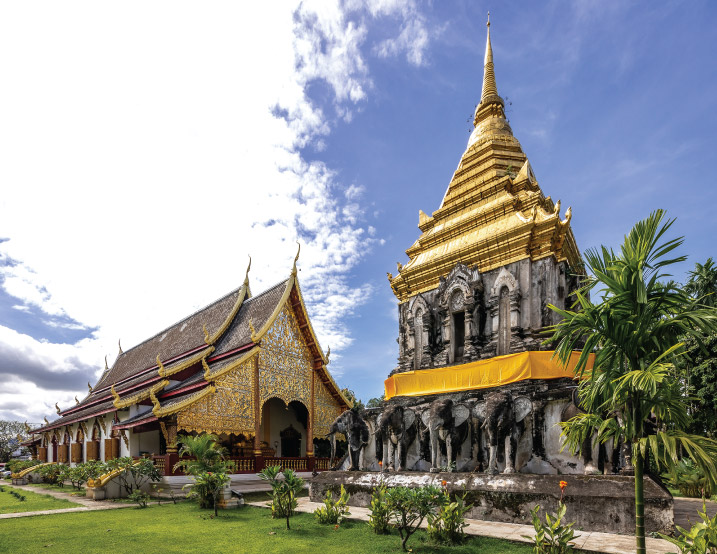
Wat Chiang Man
The oldest Temple in Chiang Mai town, Wat Chiang Man was built in 1296 by King Mengrai of Lanna kingdom. The temple is famous for its Lanna-style chedi supported by rows of elephant-shaped buttresses. The beautiful Lanna-style ordination hall enshrines an ancient Buddha image named Phra Kaew Khao, revered by Chiang Mai locals. Wat Chiang Man is situated off of Ratchapakhinai Road in the northeast corner of the old city.
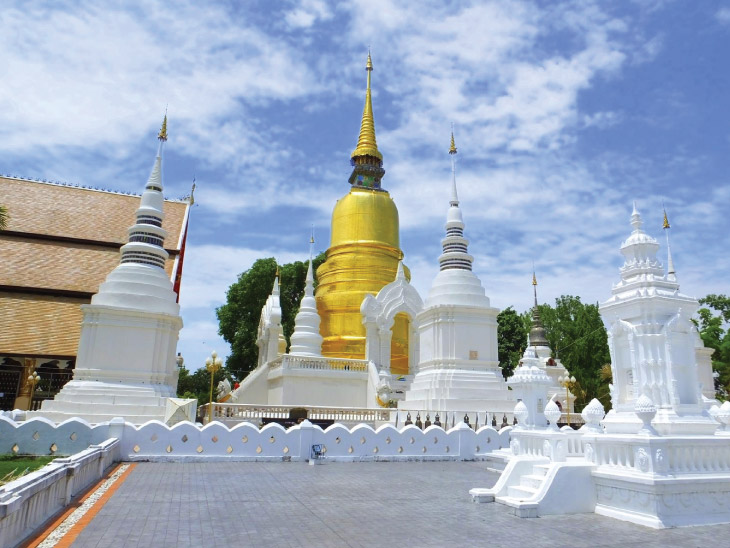
Wat Suan Dok
Built on a former flower garden in 1373, this important monastery enshrines one half of a sacred Buddha relic; the other half was transported by white elephant to Wat Phra That Doi Suthep. The main chedi is a gilded, bell-shaped structure that rises above a sea of white memorial chedi honouring the Thai royal family, with the ridge of Doi Suthep soaring behind. The hangar-like main wí·hăhn (sanctuary) contains a huge standing Buddha statue that almost touches the ceiling. Take some time to wander the memorial garden of whitewashed chedi in front of the monastery, which contain the ashes of generations of Lanna royalty. Mahachulalongkorn Buddhist University is located on the same grounds and foreigners often join the popular Monk Chat and English-language meditation retreats.
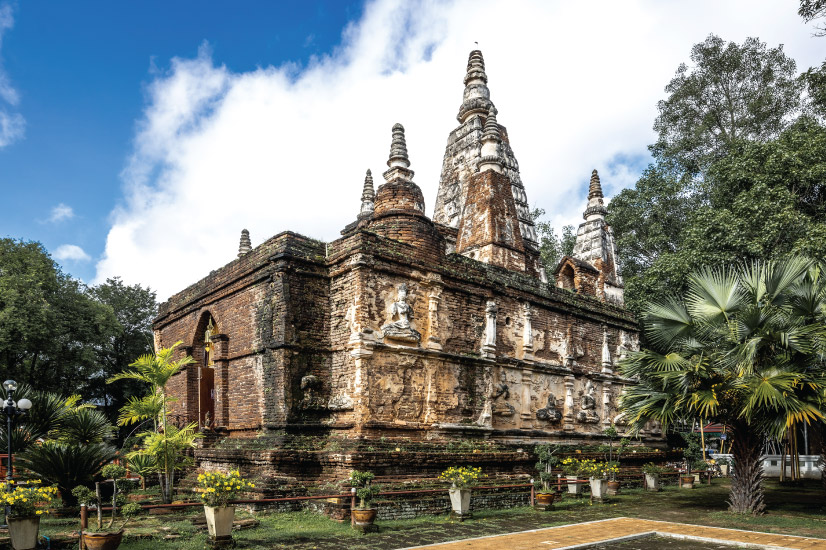
Wat Jed Yod
The Wat Jed Yod is an attractive Lanna era temple complex in the outskirts of Chiang Mai that contains some very unique architecture. Lanna, Rattanakosin, Lao, Chinese & Indian influence The temple that is also known as Wat Chet Yot and Wat Photharam Maha Vihara is a Royal temple dating back to the 15th century. Its architectural style shows Lanna, Rattanakosin, Lao, Chinese and Indian influence. The temple was built during the reign of King Tilokkarat, King of the Lanna Kingdom from 1441 until 1487. The King’s ashes are enshrined in a chedi on the temple grounds.
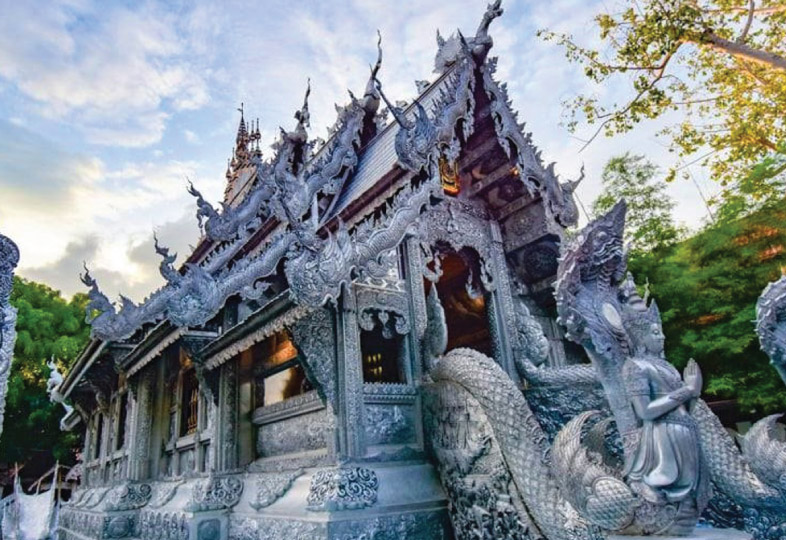
Wat Srisuphan
Wat Sri Suphan, Chiang Mai’s “Silver Temple,” is one of the most exciting and active temples, located outside the old walled city. It is just north of the Chiang Mai gate, the northern entrance to the old city. The name of this district is Haiya, but everyone knows this neighborhood as the Wualai area, named after the street with the same name. This neighborhood has been the center of the silver and lacquerware handicraft industry for more than 200 years. Then silver and lacquerware artisans from the Kengtung area in Burma settled in this neighborhood. The lacquerware industry has moved to an area east of Chiang Mai. The silver handicraft industry is still alive on Wualai road and its side streets. Wat Srisuphan is the temple where you can learn the skill of repoussé and chasing metal and silver sheets.
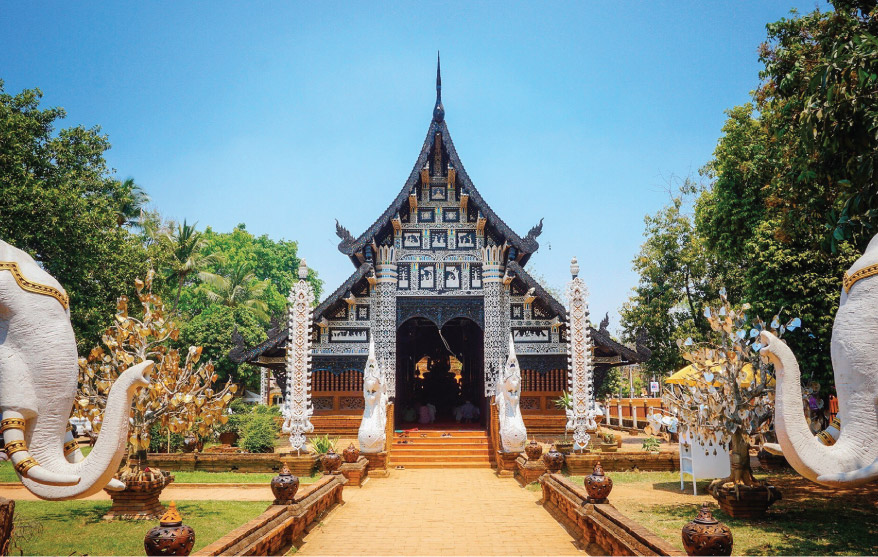
Wat Lok Molee
Wat Lok Moli (or Lok Molee) was already established in the 14th century as records show that the sixth king of the Mengrai Dynasty, King Kuena (1355-1385), invited Burmese monks to come and live in the temple and spread the teachings of the Buddha. The viharn is made of teak, covered in black lacquer, in the Lanna style with a overlapping roof consisting of several tiers with a steep pitch and sweeping very low almost to the ground. The bargeboards are decorated with naga whose scaly bodies consist of many different coloured pieces of glass. At the apex of each tier are chofa, eagle finials with wind-bells.
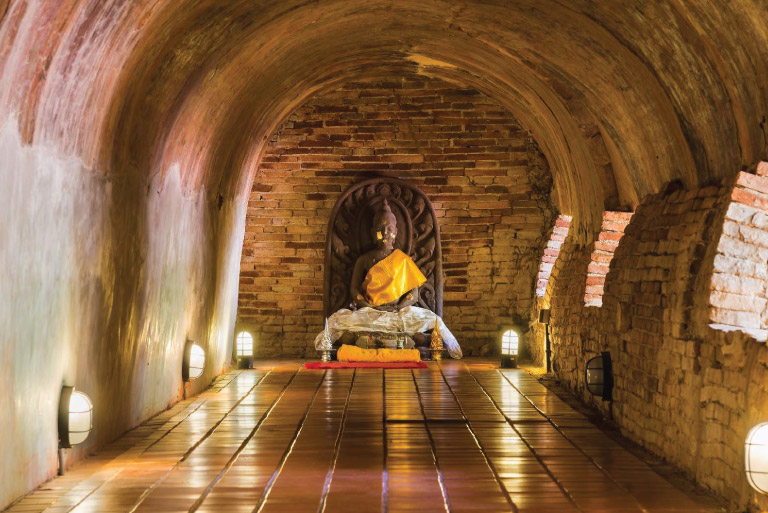
Wat Umong Suan Phutthatham
Wat Umong Suan Phutthatham dates back to the end of the 13th century and was built by King Mengrai. At the time, along with King Ramkhamhaeng, ruler of the Sukhothai Kingdom and King Ngam Muang, who ruled Payao at the time, established the Lanna Kingdom and were in the throes of building a new capital city, Chiang Mai. Part of the vital construction of this city included building several temples, and Wat Umong Suan Phutthatham was one of these.
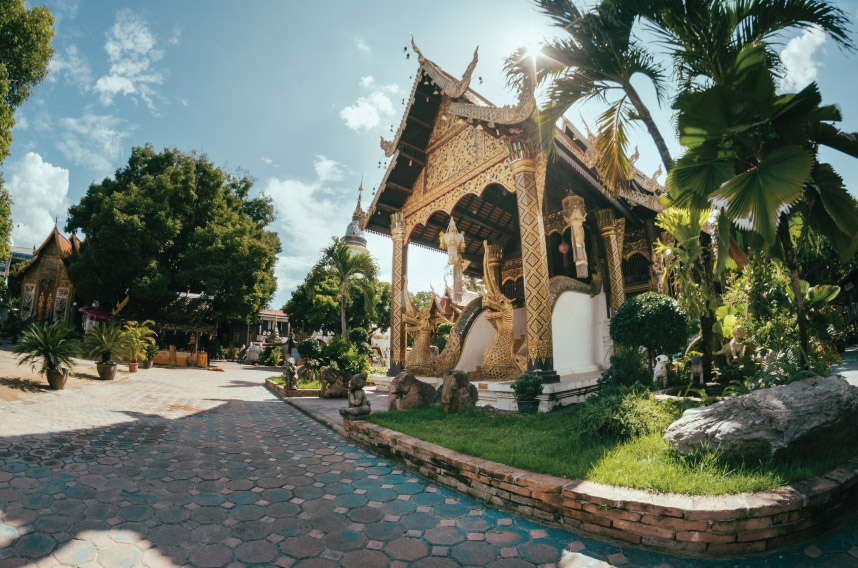
Wat Ket Karam
Wat Ket Karaam (วัดเกตการาม) is a temple on the east side of the Ping River in the Wat Ket neighborhood. The temple is also known as Wat Sa Ket. The name of the temple is often spelled as Wat Gate Karaam or Wat Ket Karam. According to information at the temple, construction took place in the year 1428 (B.E.1971) during the reign of Phaya (King) Samfangkaen, the 8th ruler of the Mangrai Dynasty. It is the most important temple of the Wat Ket subdistrict, a historic area with a rich and interesting history.
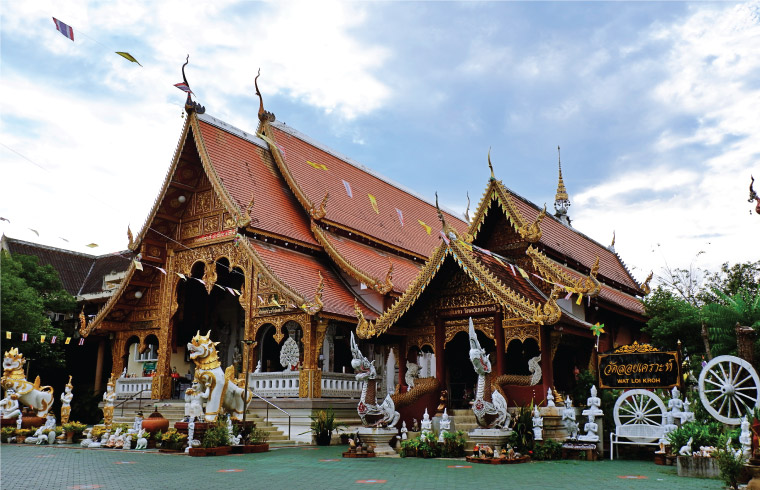
Wat Loy Kroh
The temple’s history goes back to 1456 when it was constructed during the rule of King Kue Na, who was the 6th king of the Lanna Kingdom’s Mengrai Dynasty. In 1774, Prince Kawila of Lampang released Chiang Mai after several years of bloody war. Years of warfare and the Burmese occupation resulted in a deserted Chiang Mai, where most of the buildings were in ruins. But in 1802, Prince Kawila became Chiang Mai’s new ruler after he paid homage to the King of Thailand, which back then was known as Siam. The temple is conveniently located near the popular night market of Chiang Mai and can be accessed by foot, or local transport.
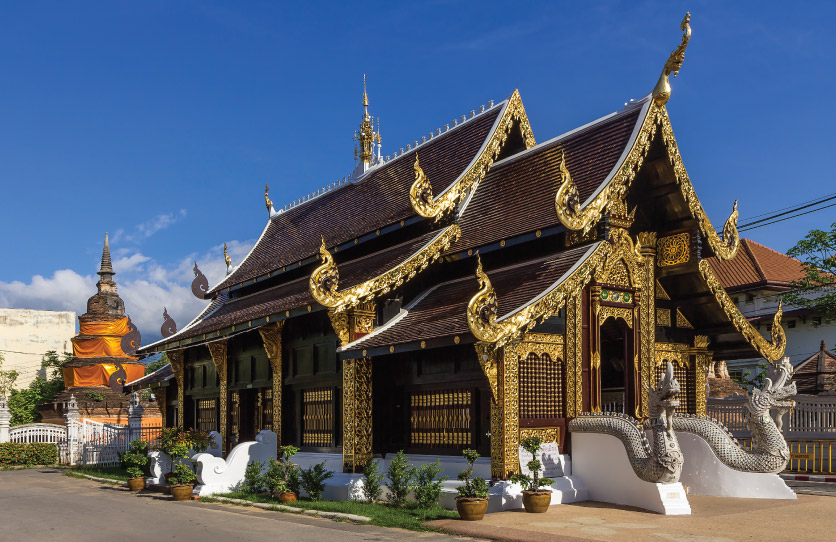
Wat Inthakin
The Wat Inthakin is a little visited temple in the heart of the old walled town of Chiang Mai. The small, active temple comprises of a very ornate viharn, two chedis and the monks living quarters. The temple is also known as the Wat Sadue Muang, which translates to “temple of the city navel”, a reference to the spot in the center of town where the temple was built over 700 years ago.
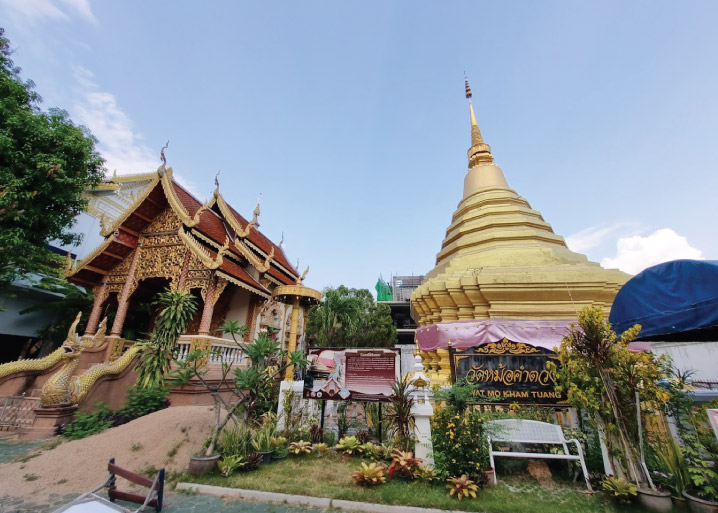
Wat Mo Kham Tuang
Wat Mo Kham Tuang in Chiang Mai, which was established in 1576, is well worth a visit with one of its most interesting attractions to look for being the murals in the Viharn and the five-headed cobra or naga which is situated in the courtyard next to the ku or small chedi, which instead of sheltering the Buddha as usual, is curled around a large funural urn. The temple has a viharn, an ubosot, a chdi as well as large and small salas and kuti buildings. It also has two interesting statues of Hindu deities.
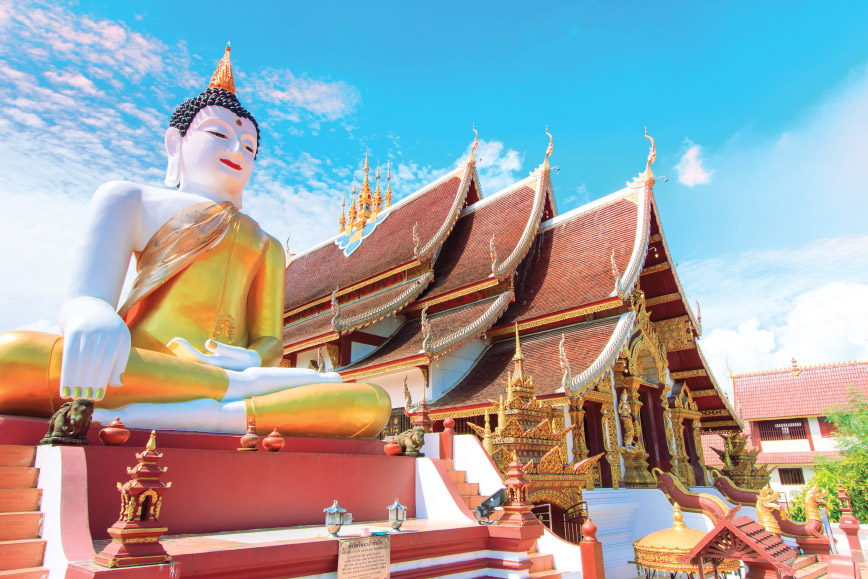
Wat Rajamontean
Wat Rajamontean has a rich history that dates back several centuries. Originally built in the ancient Lanna Kingdom, the temple has undergone renovations and expansions over the years. It has served as a place of worship and meditation for Buddhist monks and devotees, offering a peaceful sanctuary away from the hustle and bustle of the city. Wat Rajamontean holds great significance for the local community and visitors alike. It serves as a spiritual center and a place for individuals to find solace and inner peace. The temple also plays a vital role in preserving the rich cultural heritage of Chiang Mai and Thailand as a whole.
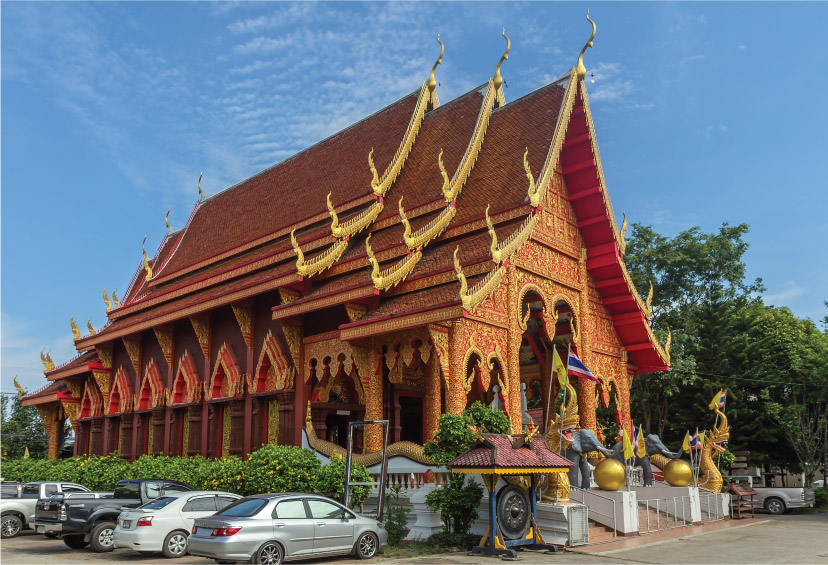
Wat Chiang Yuen
Wat Chiang Yuen is located north of Chiang Mai's old city wall, about 430 meters west of Wat Pa Pao, and 290 meters northwest of Wat Chiang Man. It is notable for its tall octagonal chedi set upon a high, redented square base decorated with flower-like designs. To the east of the chedi is a wooden viharn featuring a charming peacock ornament on the gable end, comparable to the one found at Wat Phan Tao. It likely indicates the zodaic birth sign of the temple's sponsor.
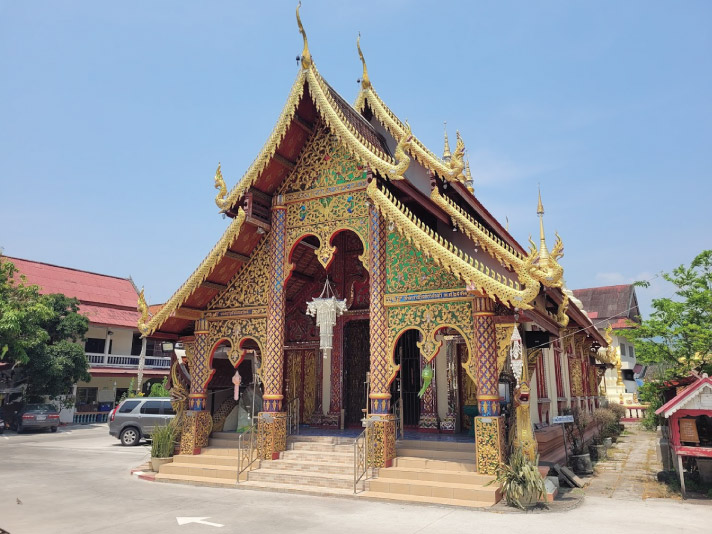
Wat Khuan Kha Ma
Wat Khuan Khama has a distinctive horse theme due to a touching tale which led to the establishment of the temple here in 1492. The notice board at the entrance retells the story of a horse groom and soldier serving under General Jaomun Damtuang who, when his much loved horse died, decided to donate his land for the building of a new temple in commemoration of the horse. He named the temple “Khuan Khama”
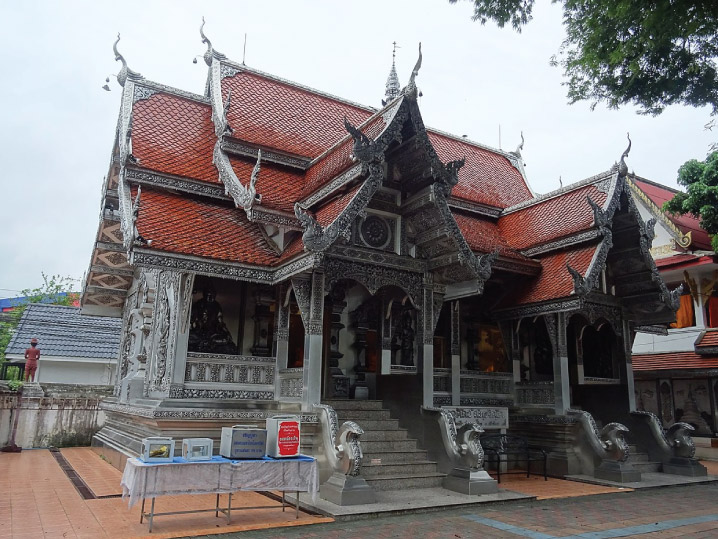
Wat Muean Sarn
Wat Muen San is situated in the old silver town area and like its more famous neighbour Wat Sri Suphan, it also uses “silver” for one its buildings. This lesser known temple much less commercialized than Wat Sri Suphan; you can go there and look around the temple and it’s probable you’ll be the only visitor unlike the crowds which flock to the other temple. And women may enter, unlike at Wat Sri Suphan, because the building is a pavilion and not an ubosot.
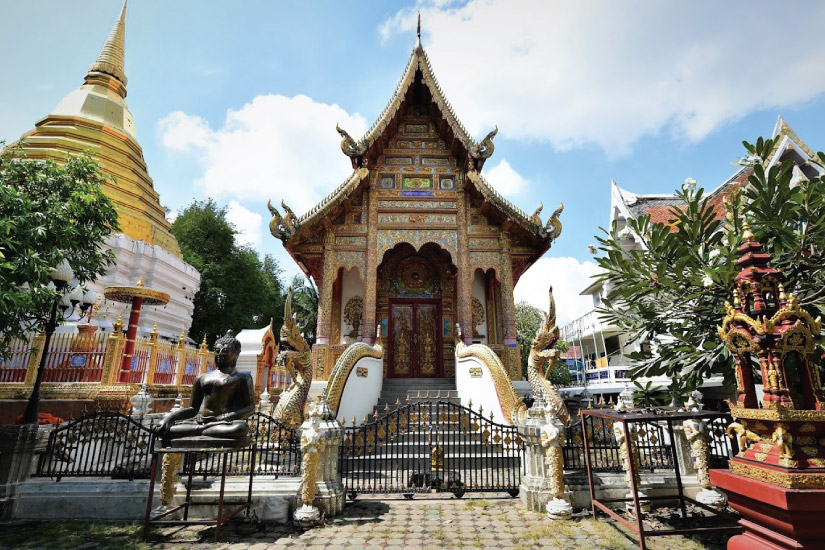
Wat That Kham
Wat That Kham, formerly known as Wat Kuti Kham, was called Wat Mai in the past by villagers, located halfway between the inner city wall. against the wall when the outer layer The original temple area was extensive. In front of the temple is Suriyawong Road, which is the road from Chiang Mai Gate. which is the gate of the inner city wall in the south go to the gate which is the city gate on the outer wall This route was originally from ancient times. It's the way for the people of Chiang Mai. Travel to Lamphun If considering the principal Buddha image in the Ubosot and the nature of the temple construction It is expected to be a royal temple built by the King. and was a large temple before Later, when the Burmese ruled Chiang Mai. This monastery was abandoned for a while. Until the year 2347, King Kawila evacuated the Tai Khen kitchen. Tai Lue is from Xishuangbanna. and Chiang Tung came to live in Chiang Mai. He allocated an area in the inner city wall in the south to settle. At that time, "Chao Saramphayaphum Narinthra Khemathipti Racha", the ruler of Kengtung, moved to Chiang Mai. with a number of Thais many monasteries in that area
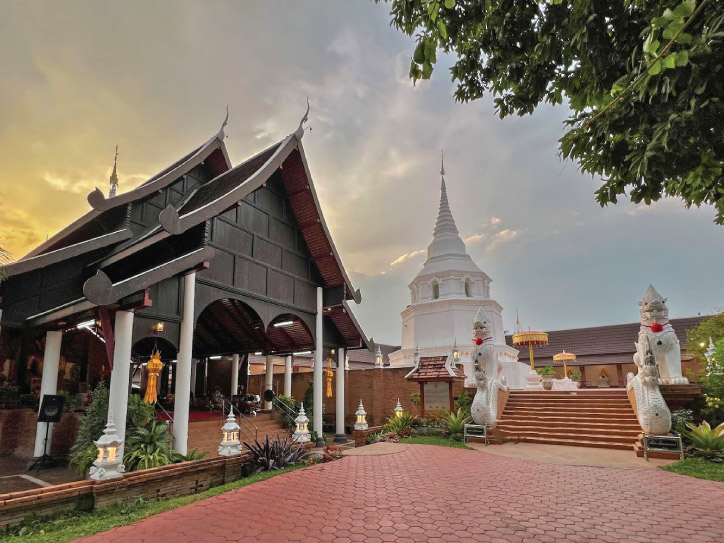
Wat Yang Guang
Wat Yang Guang is a serene Buddhist temple located in the charming countryside of Chiang Mai, Thailand. Known for its peaceful atmosphere and stunning Lanna-style architecture, the temple offers visitors a glimpse into the rich cultural heritage of Northern Thailand. The temple grounds are adorned with intricate carvings, colorful murals, and ornate decorations that reflect traditional Buddhist symbolism. A highlight of Wat Yang Guang is its impressive golden chedi (stupa), which stands as a testament to the devotion and craftsmanship of the local community.
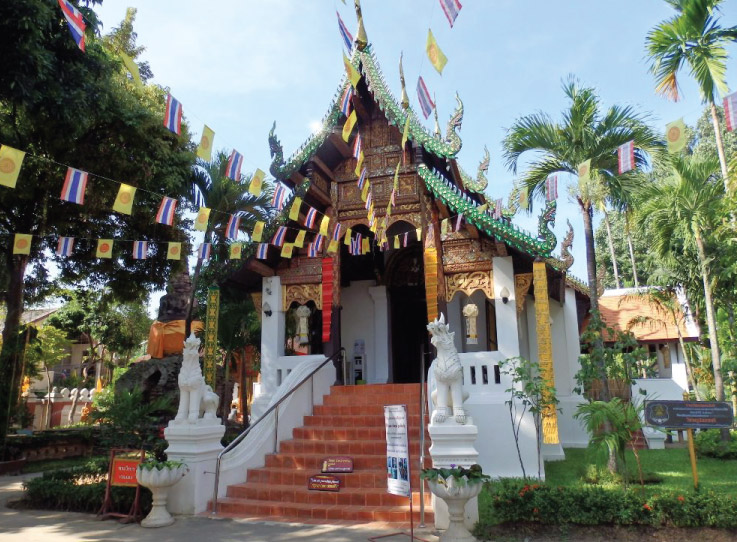
Wat Umong Maha Therachan
Wat Umong Maha Therachan is named after a famous monk Mahathera Chand (1365 – 1445) who lived in Chiang Mai and often stayed at the temple. The temple plaque also tells us that the word Umong, which means “tunnel”, refers to an underground tunnel which once linked the chedi to the viharn of which little remains. It’s a 700 year old temple in the middle of the old town with an ancient chedi and modern huts where you can meditate. A mix of the old and new, the temple, like many in the old town, has undergone recent renovation as inevitably becomes necessary due to the harsh climate, as well improvements with new buildings added.
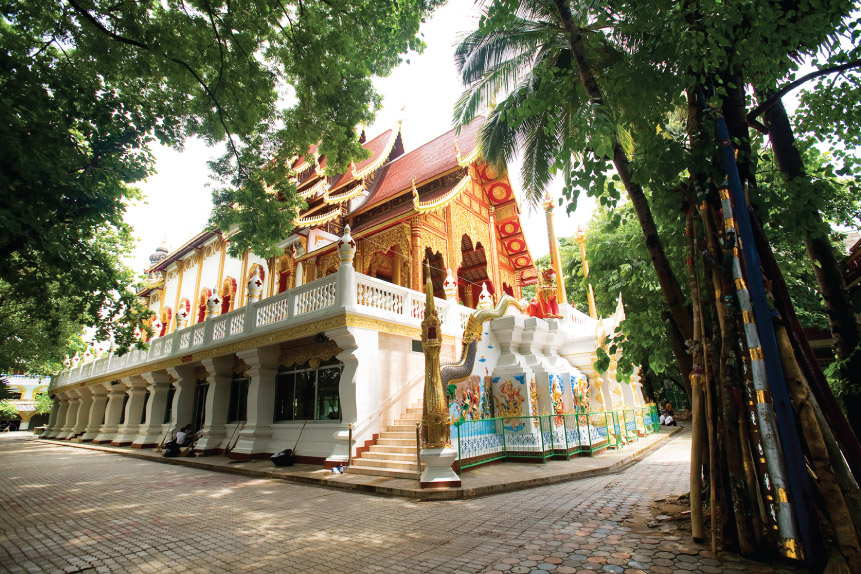
WAT Ku Tao
This temple is a couple of km west of Chiang Saen, just off road no. 1016. Wat Ku Tao (วัดกู่เต้า) is not visible from the road. There is a cluster on the left side of the road, just after the intersection with road no. 1290. Wat Ku Tao is close to the bank of the Kham River. The complex contains the ruins of a viharn, a chedi, and three superimposed cylindrical structures, decorated with stucco of angels in adoration and several other structures. The Fine Arts Department thinks this temple dates back to the 17th century. According to below video they also think that there is direct link with Wat Ku Tao, the Shan temple in Chiang Mai.
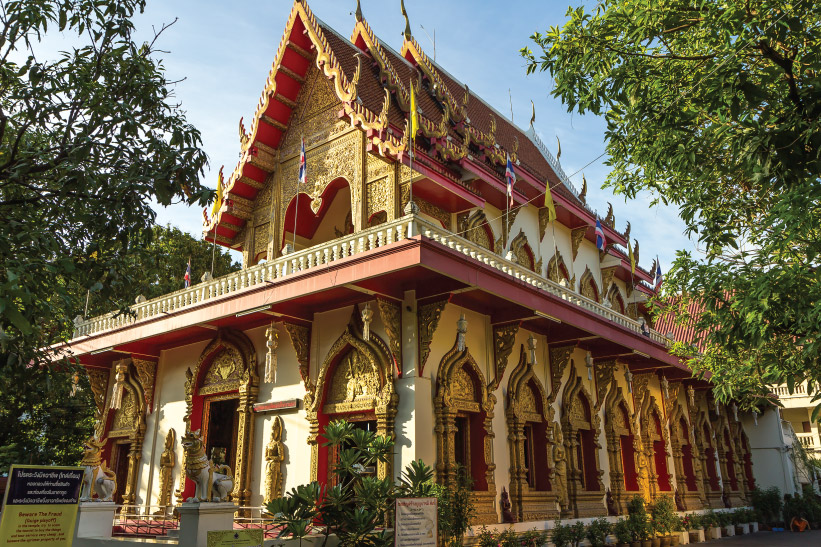
Wat Phan On
Wat Phan On (or Wat Pun On) gets a lot of visitors as it’s close to the Thapae Gate on the main Ratchadamnoen Road entering the old town where there are several other temples close together. This one only has a viharn and a chedi but the viharn makes this temple well worth stopping by. The viharn is built on two floors with only the ground floor accessible. The entrance is guarded by chinthe lions and on the walls in stucco bas-relief are Devata figures. The door and windows have ornate gilt carved decoration with flower motifs around the frame and above the lintel where there are also carved figures. The figure above the main door is that of the God Rahu who is responsible for eclipses and as usual is portrayed swallowing the sun and surrounded by clouds.
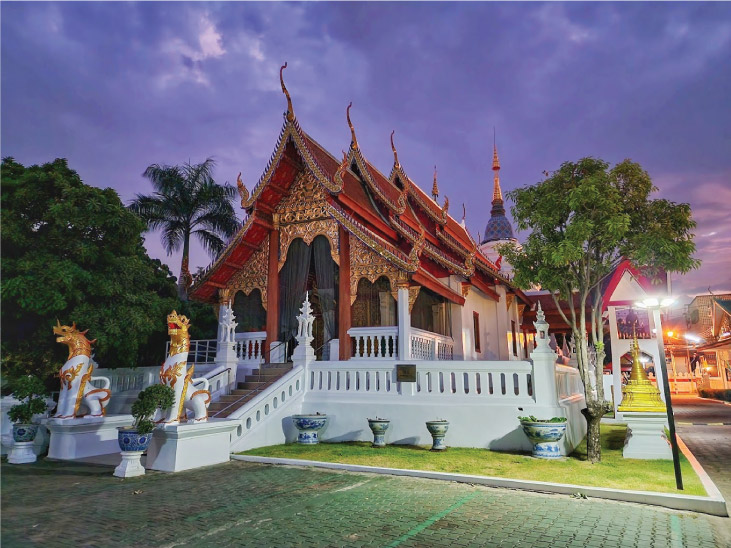
Wat Baan Ping
Wat Pan Ping is located in the northeast quadrant of Chiang Mai's old city, about one kilometer southwest of the banks of the Ping river. The temple's name refers to its intended function—to block malign influences or dangers arising from the opposite side of the Ping river. As such, it would have formed a supernatural barrier complementing the city's physical defenses, which included its roughly 6.3 kilometers of walls.
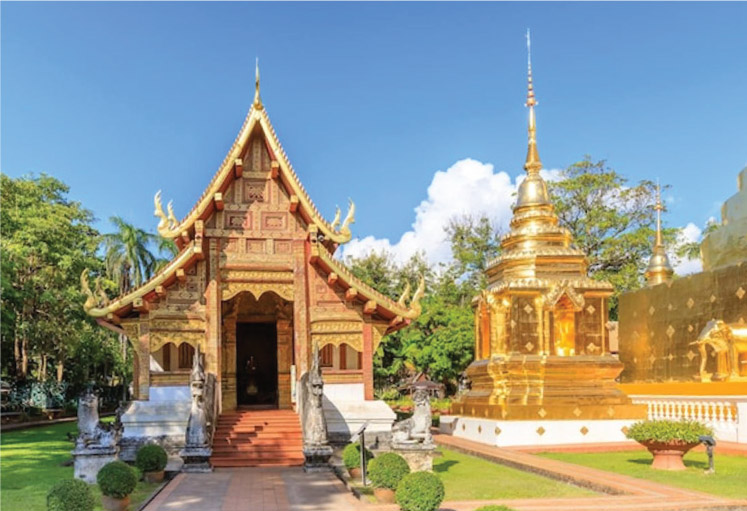
Wat Dok kham
Wat Dok Kam is located in Si Phum Subdistrict, Mueang Chiang Mai District, Chiang Mai Province, on a plot of land covering 1 rai and 3 square wa. The temple was established in 2326 BE (1783 CE), as recorded in an inscription found at the base of a Buddha statue in the temple's main hall. During the reign of King Kawila, ruler of Chiang Mai, the territory was expanded, and people from the cities of Ban and Tong Kai were resettled in Chiang Mai, forming a community. The residents of these cities later collaborated to build Wat Dok Kam. Initially, the temple was called Wat Chang Tho Kam. The name was later changed to "Wat Dok Kam" to harmonize with the names of nearby temples.
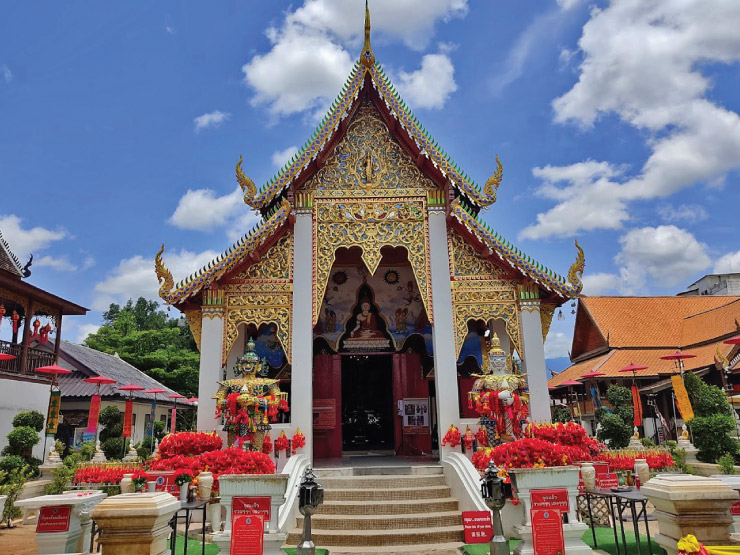
Wat Sai Moon Mueang
Wat Sai Moon Muang (or Sai Mun Muang) was first established in 1487 during the reign of the King Tilokarat who became king in 1443. He was the twelfth monarch of the Mangrai Dynasty which ruled the Lanna Kingdom from 1292 to 1558. He also built Wat Chet Yod and enlarged Wat Chedi Luang to house the Emerald Buddha.According to the plaque in the grounds, originally the temple was called Wat Aranbarnpa but changed its name to Wat Sai Moon Muang in 1907 after the Saimoon swamp area in which it was originally situated.
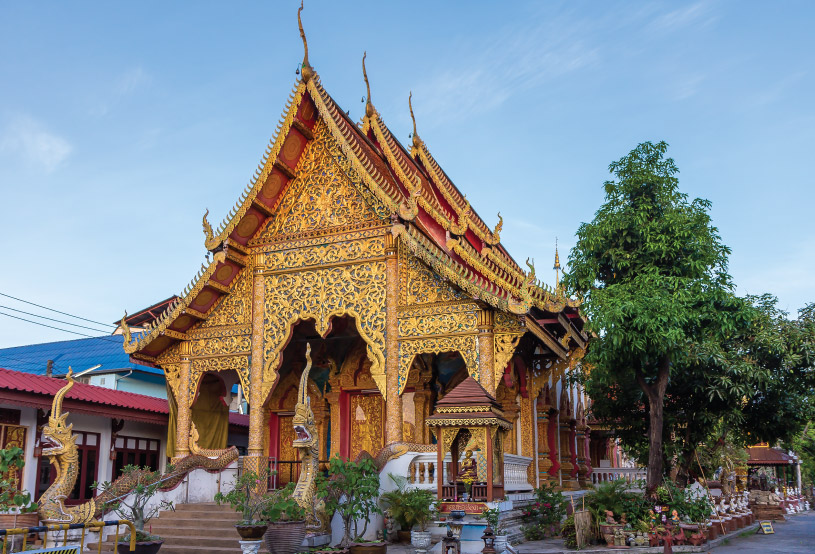
Wat Lam Chang
Wat Lam Chang is a 14th century temple situated across the road from Chiang Mai’s oldest temple Wat Chiang Man. Its name, which means “Temple of the tethered elephant”, is derived from its historical location on grounds where elephants were housed and fed in medieval times. These elephants were used to carry members of the royal household and were unlikely to have been used as labour. Appropriately, the temple is a paradise for elephant lovers with countless images on display.